While mileage fraud is less common among premium vehicles, the financial impact is much greater. A small percentage of high-value cars — even just 2–3% — can translate into massive financial losses for unsuspecting buyers.

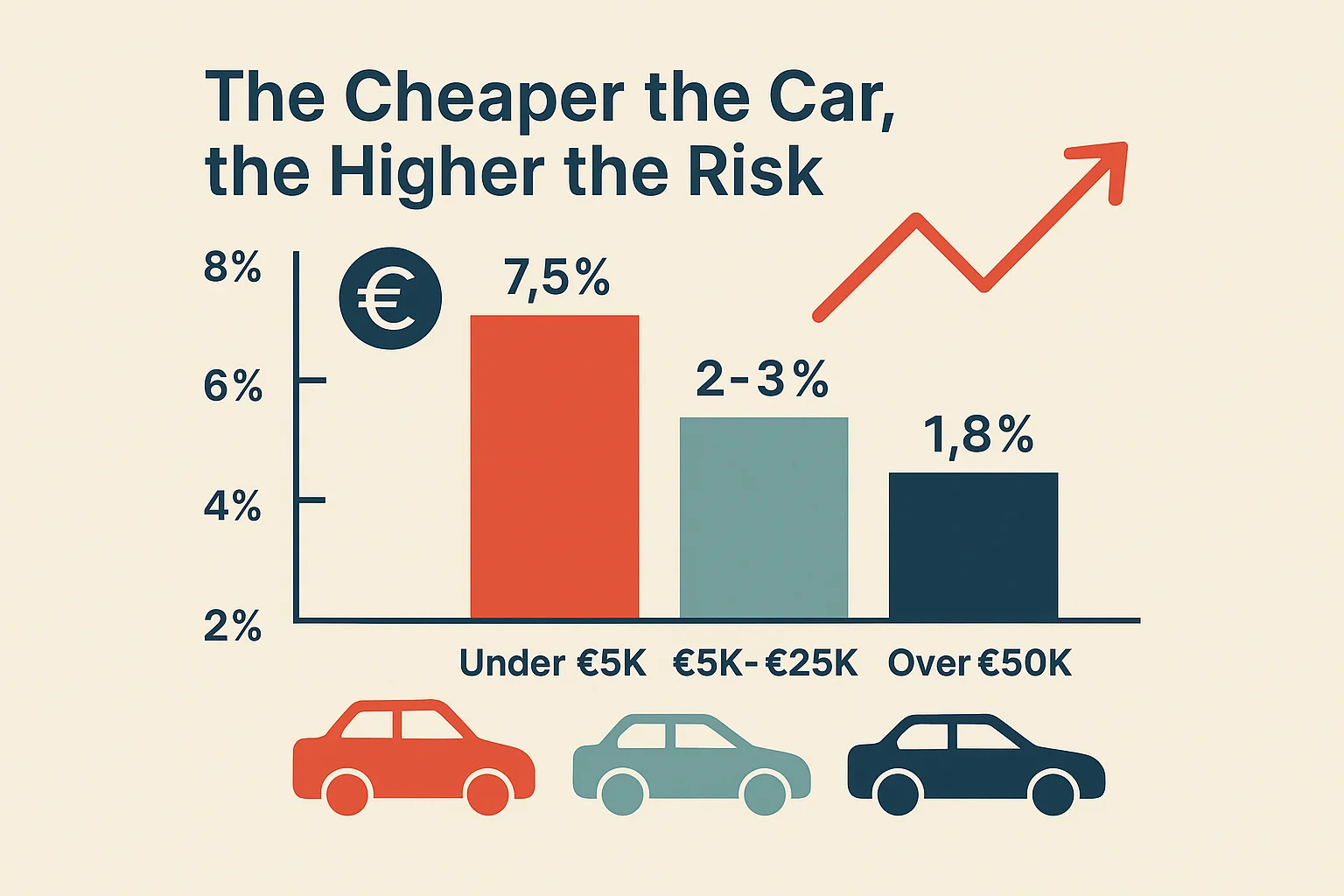
According to VIN Survey data, the likelihood of odometer fraud decreases as the price of the car increases. Vehicles below €5,000 have the highest manipulation rate (7.5%), while those above €25,000 see a significant drop to around 2–3%. Cars over €50,000 are the least affected, with only 1.8% showing mileage discrepancies.
Lower-priced vehicles are often sold with limited documentation or without a detailed history check. This makes it easier for dishonest sellers to roll back mileage, increasing the selling price and deceiving buyers. Many budget-conscious drivers also skip ordering a vehicle history report — a mistake that can lead to major losses later.
“Car buyers often seek low mileage, but if that number isn’t verified, it can be misleading,” explains an automotive expert from VIN Survey. “Hidden wear and tear or mechanical issues can appear soon after purchase, leading to unexpected expenses.”
Mileage tampering is particularly widespread in Eastern European markets, though it occurs globally. Economic factors and market demand play a big role in why older, cheaper cars are clocked more frequently in this region.
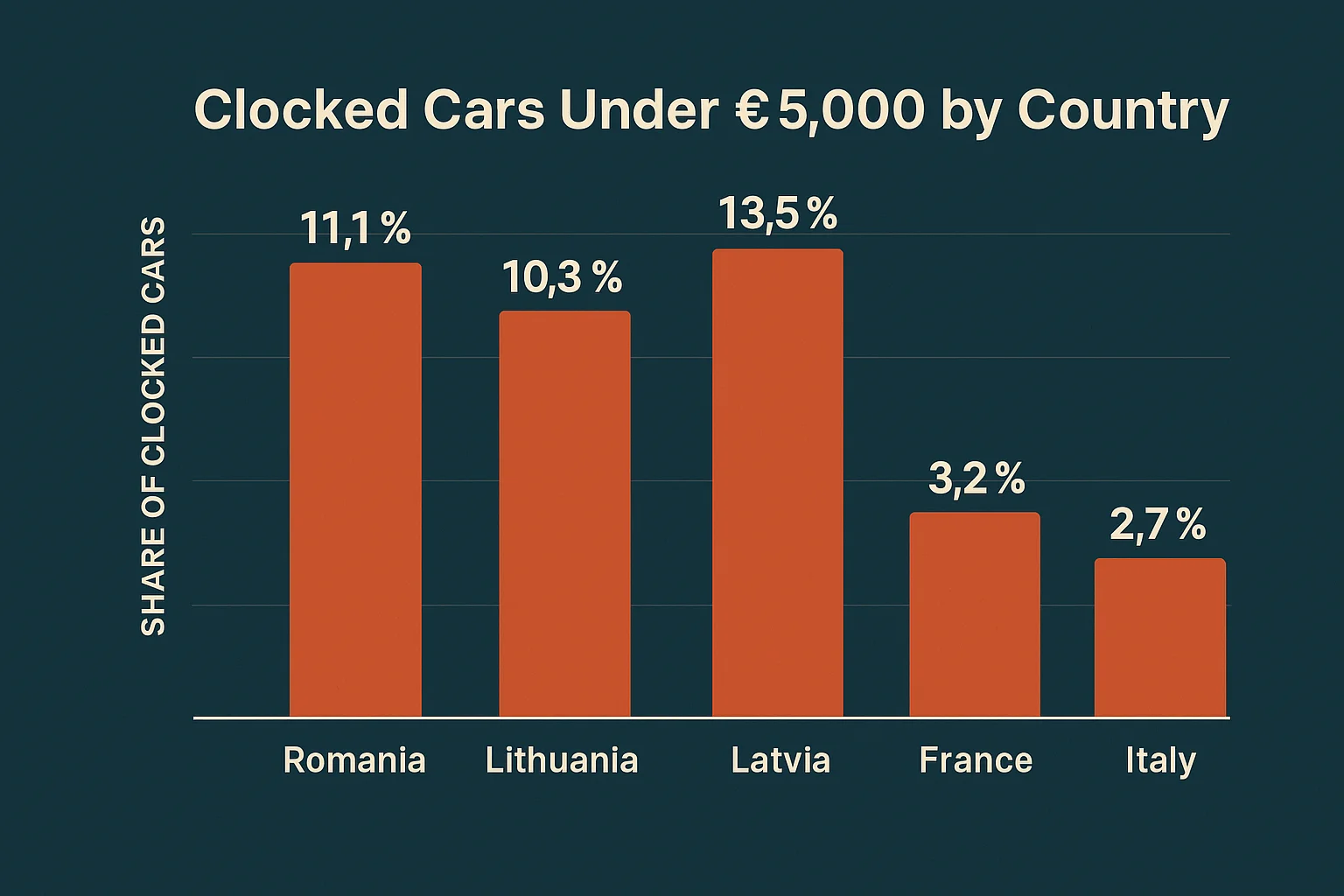
For example, in Romania, 11.1% of sub-€5,000 cars are clocked. In Lithuania, the rate is 10.3%, and in Latvia, 13.5%. By comparison, Western European countries like France and Italy show much lower rates (around 3%).
Buyers seeking affordable vehicles in these regions are often more price-sensitive, which ironically makes them more vulnerable to scams. A vehicle bought cheaply might cost significantly more in repairs and depreciation if it has a falsified odometer reading.
While mileage fraud is less common among premium vehicles, the financial impact is much greater. A small percentage of high-value cars — even just 2–3% — can translate into massive financial losses for unsuspecting buyers.
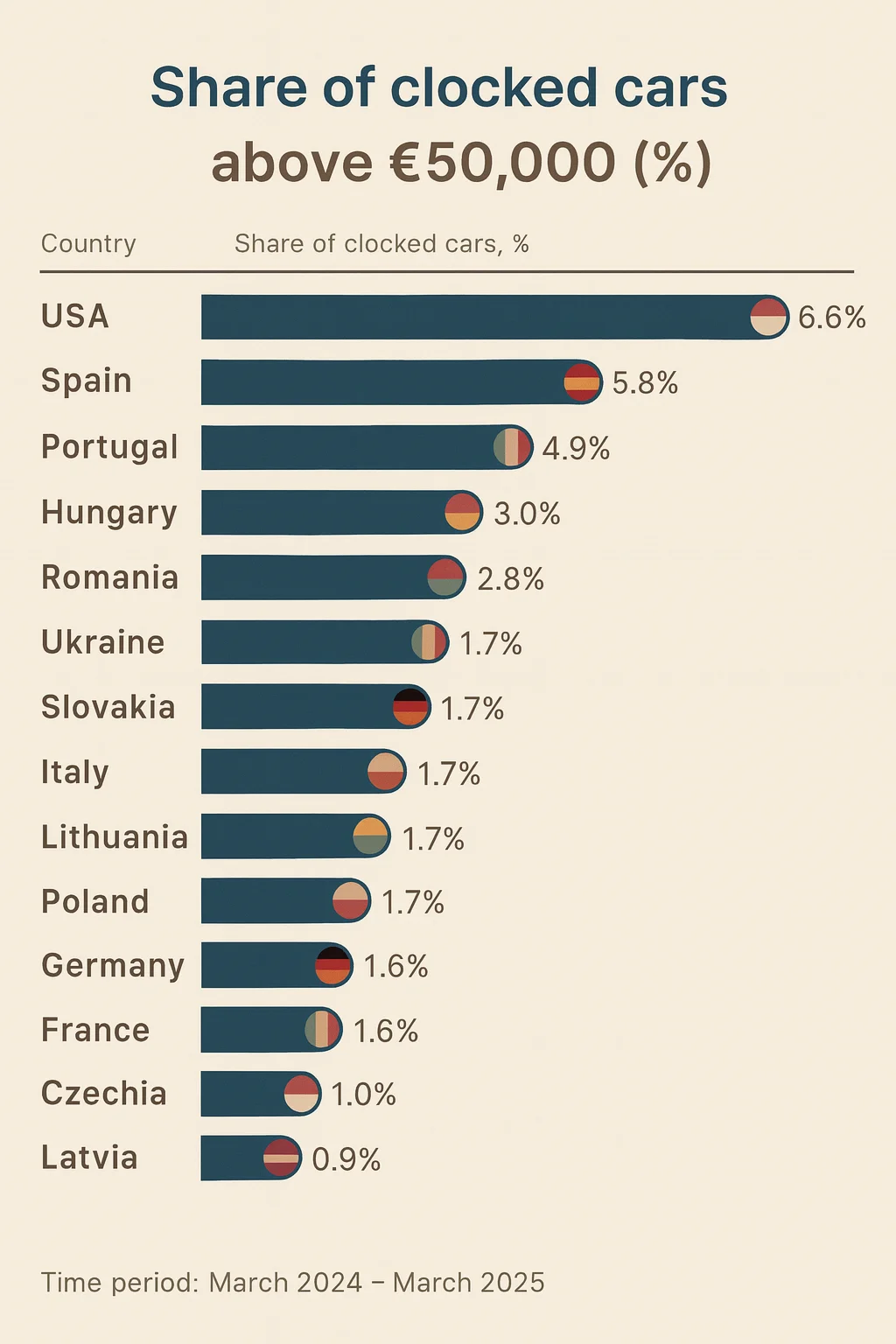
For example, buying a luxury car worth €50,000 with a rolled-back odometer could mean overpaying by as much as €10,000. These vehicles may also require more expensive maintenance due to hidden wear and tear. Interestingly, Spain and Portugal lead in odometer fraud within the premium segment — 5.8% and 4.9%, respectively.
Although it can be difficult to detect, there are several red flags that can help you spot a tampered odometer before purchasing a used car:
These signs don’t always confirm fraud, but they should encourage buyers to be more cautious. A quick VIN lookup using VIN Survey can reveal the car’s entire recorded history, helping you make a safer decision.
To confirm whether a car’s odometer reading is genuine, every VIN Survey vehicle history report includes a dedicated Odometer Section. This section tracks all recorded mileage entries and displays them in a clear, visual graph.
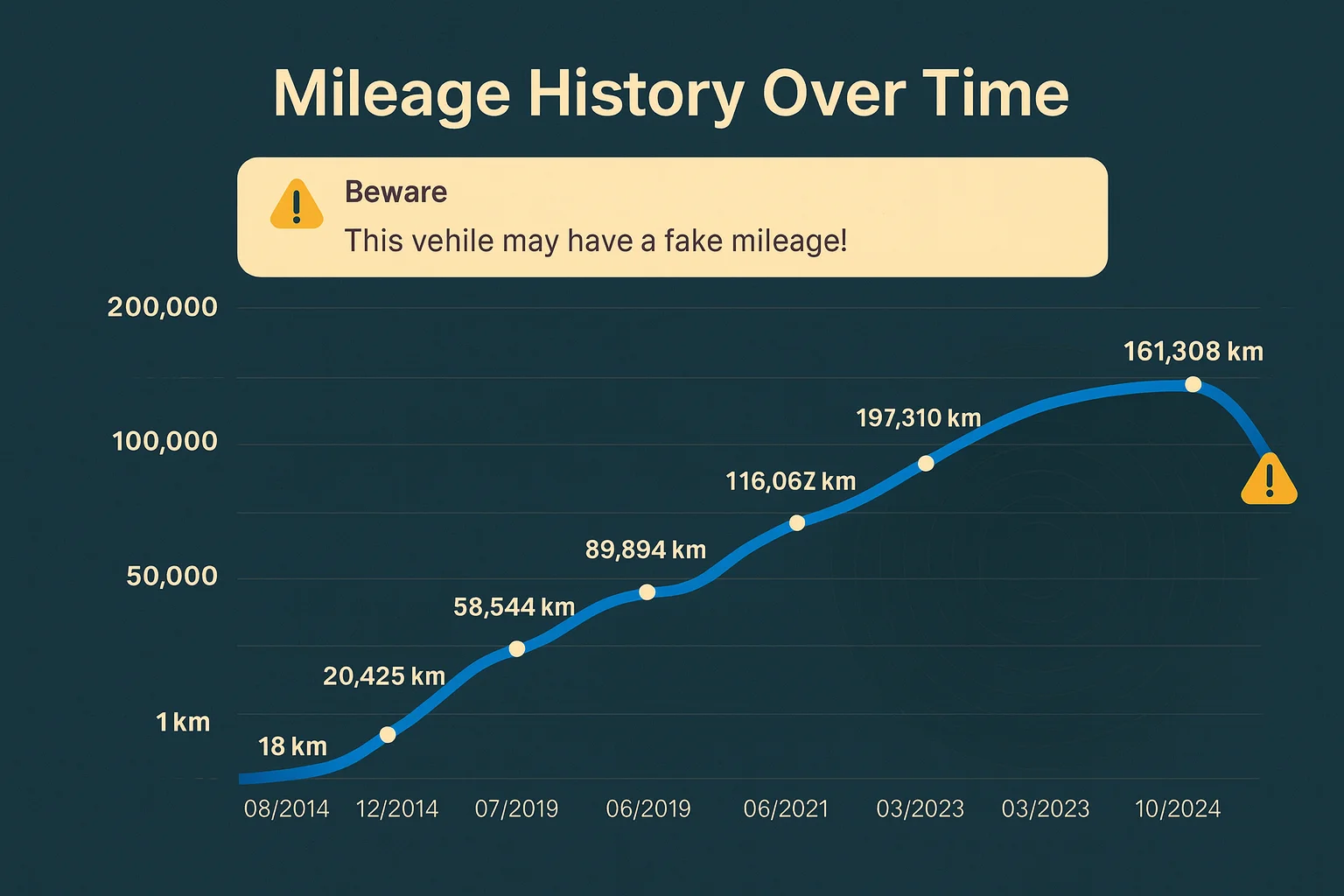
If a sudden drop or irregularity appears in the data, it’s a clear sign of tampering. This tool makes it easy for buyers to confirm the vehicle’s real usage before committing to a purchase — and even negotiate a fairer price if any discrepancies are found.
Odometer fraud remains one of the most common scams in the used car market. Whether you’re shopping for a budget-friendly ride or a premium model, always verify its past with VIN Survey. A quick VIN check can help you avoid hidden risks, overpricing, and costly surprises — ensuring your next car purchase is truly worth the investment.

Before buying any used car, get the confidence you need with a detailed Vehicle History Report from VIN Survey. Our reports provide verified insights into a vehicle’s past — including accidents, ownership history, title records, mileage verification, and more. Make an informed decision with trusted data from VIN Survey— your reliable source for accurate vehicle history reports